Outline of Greenland: A Complete Guide to the World's Largest Island
Nestled in the High Arctic, Greenland is a profound geographic enigmatic, the world's largest island, Greater in size than all except three nations. This vast land, predominantly covered by an ice sheet over two miles thick, is a marvel of Nature's artistry. Despite its immense size, Greenland's population is recorded as just over 56,000, making it one of the most sparsely populated territories globally.
Greenland's origin dates back to the Paleo-Eocene epoch around 55 million years ago, with the formation of the North Atlantic land bridge connecting Greenland to North America. The lush landscapes of the early Miocene have since evolved into the current icy terrain, shaping the island's unique flora and fauna.
Geography and Landscape
Greenland's geography is dominated by a massive ice sheet, the second-largest in the world, which covers about 85% of its land area. Known as the Grønland IA, it holds the equivalent of seven meters of global sea-level rise.


The rest of the island is a coastline of firn, moraines, and fjords carved by the relentless tide of glaciers. The vast coastline stretches over 44,000 kilometers, forming some of the most yielding grounds for scientific exploration, especially in the Arctic Ocean.
Ice Sheet cartel
The Greenland ice sheet has been contracted to lose mass in recent decades due to global warming, with the warmer climate contributing to more melting and glacial retreat. A study by the National Aeronautics and Space Administration (NASA) estimates a loss of nearly 4,000 billion metric tons of ice between 1992 and 2018.


This meltdown contributes significantly to the rise in global sea levels, posing a severe environmental threat. However, despite these challenges, the ice sheet still presents unique scientific opportunities to unravel the planet's history, including discovering the early human history of the region.
Coastal Ecosystems and Biodiversity
Despite the dominant icy landscape, Greenland's coastal areas host a biodiversity hotspot. The ocean currents bring nutrients to the cold waters around Greenland, fostering a thriving ecosystem. The waters teem with various species, such as narwhals, beluga whales, and polar bears.
The tundra vegetation along the coast provides critical habitat for various arctic flora and fauna, including reindeer, musk ox, and Arctic foxes. laminated algae, mosses, and lichens in the tiny patches of exposed land constitute the backbone of the food chain.


Climate, Weather, and Wildlife
The combination of the vast ice sheet, sea currents, and latitude makes Greenland's climate extremely cold. Summer temperatures rarely exceed 10°C (50°F) even at lower altitudes.
Prompted by climate change, Greenland's once-considerable marine ecosystem is under threat due to melting sea ice. The ice, melting earlier and forming later, disrupts the practicing migratory patterns of species, thus jeopardizing the entire food chain.
Flora
Greenland supports a robust flora, uniquely adapted to its cold, harsh environment.Though it is predominantly treeless, it harbors around 500 plant species, including several mosses, lichens, and sedges. The lingering snow creates favorable microclimates for these species, enabling them to survive in this seemingly desolate landscape.

The thawing permafrost and melting sea ice expose rare plants like the arctic buckwheat and purple saxifrage, which are critical to the broader ecosystem, providing food and habitat for numerous animal species.
Fauna
Greenland's wildlife is as enchanting as it is challenging. Musk oxen, Arctic foxes, and polar bears inhabit the ice-free areas, which support feedings of mosses, berries, and invertebrates. The archipelago's rich marine life hosts humpbacks, bowhead whales, and fin whales in its icy waters.
Predictably, hunting is a central part of Greenlanders' culture and lifestyle. These communities depend on these animals for sustenance, taking only what they require with strict guidelines from the Greenland government to protect the species.
Greenland's strength lies in its enigmatic contradictions - an ice giant filled with frozen silence yet pulsating with lively hues of sovereignty, resilient people, and tempting science goldmines. Despite these draws, there's a delicate balance, as Greenland's environment is under duress, highlighting the importance of sustainable development, responsible tourism, and innovative science.
Related Articles
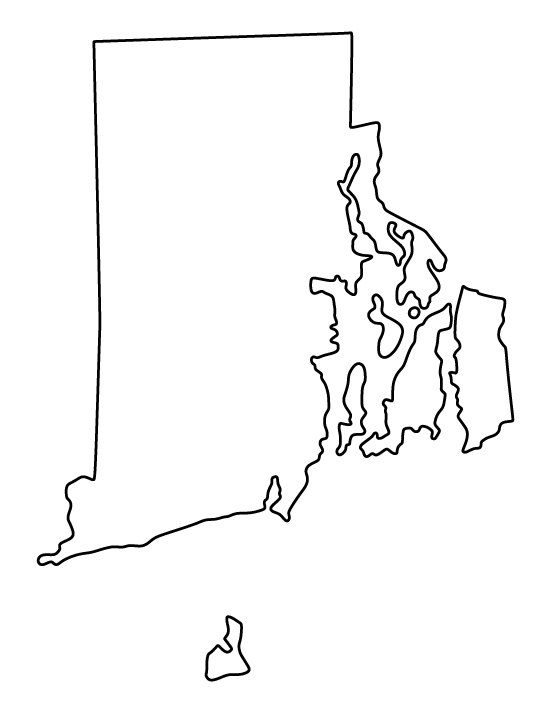
Outline of Rhode Island: Your Complete Guide to the Ocean State
{"description": ["Printable Rhode Island Template", "Free Rhode Island outline with HOME on border, cricut or Silhouette design, vector image, pattern, map...
Greenland Map Outline: Complete Guide & Facts
{"description": ["Printable Blank Greenland Map with Outline, Transparent Map", "Greenland pattern. Use the printable outline for crafts, creating stencils...

Outline of Puerto Rico Map: Complete Island Guide
{"description": ["Great for lessons on U.S. territories, this printable map features an outline of Puerto Rico. Free to download and print"]}

Prince Edward Island Outline: Your Complete Guide
{"description": ["Prince edward island map silhouette black vector province outline for infographics design amp print | Premium Vector", "Prince Edward Island...

Puerto Rico Outline: Your Complete Guide to the Island
{"description": ["Great for lessons on U.S. territories, this printable map features an outline of Puerto Rico. Free to download and print", "palmettosvg...
Rhode Island Outline: A Complete Guide to the Ocean State
{"description": ["Printable Rhode Island Template", "Free Rhode Island outline with HOME on border, cricut or Silhouette design, vector image, pattern, map...